A Cheerful Back-to-School Design for Embroidered Crafts
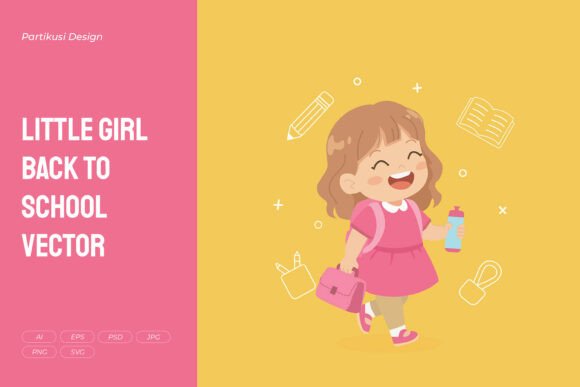
Every season brings its own thematic rush, and for makers, the back-to-school period is a goldmine of opportunity. It’s not just about selling items; it’s about creating pieces that resonate with that specific, nostalgic excitement. When I first opened the Little Girl Back to School Vector, my immediate thought was, “This is the mood.” It’s not a complex illustration; it’s a bright, cheerful vector of a happy little girl with her backpack and water bottle. The simplicity here is its strength. For an embroidery designer, that means a clear, recognizable shape that will translate into stitches without losing its joyful personality.
The First Impression: Where This Design Naturally Belongs
The artwork has a welcoming, almost storybook feel. The girl’s posture and the classic school accessories create a universal theme—celebrating a new beginning. This isn’t a hyper-detailed portrait; it’s a friendly icon. That visual personality tells me it belongs on items meant to convey warmth and personal connection. I instinctively pictured it on a custom tote bag for a teacher, a personalized sweatshirt for a student, or as a sweet patch on a child’s backpack. For baby items, like a blanket or a little onesie for a preschooler, it would be perfectly gentle. The layout feels balanced, with enough open space around the figure to allow for clean satin stitch outlines or well-defined fill stitch areas without overcrowding the hoop.
Thinking Through a Real Project: The Embroidered Gift Tote
Let’s walk through a typical scenario. A client requests a personalized gift for a niece starting kindergarten. They want an embroidered tote bag. This Little Girl Back to School Vector is immediately a contender. My professional judgment starts with how it will stitch out. The cheerful mood is perfect for a gift, boosting its giftability. The clear shapes—the backpack, the water bottle, the girl’s smile—should convert into clean stitch paths, preserving that bright feeling. On a canvas tote, the design would pop, adding significant perceived value to a simple item. For the crafter or Etsy seller, this translates into a product that looks professional and thoughtfully made, which builds customer trust and engagement.
Performance Across Real Embroidery Situations
This design’s true test is its versatility across different embroidery projects. On custom apparel like sweatshirts or t-shirts, it would act as a focal point without being overwhelming. For baby embroidery on rompers or nursery decor pillows, its friendly theme is ideal. As an embroidered patch, it could be incredibly popular, easily applied to jackets or bags. I’d also consider it for home goods—a kitchen towel for a teacher, a pillow cover for a dorm room, even a holiday gift (think a “First Day” keepsake) around the start of the school year. For small business merchandise or boutique branding in an educational niche, it offers a consistent, recognizable design asset.
When working with digital embroidery files for commercial embroidery or creating printable mockups for your craft business listings, a design with such a clear theme helps customers visualize the finished product instantly. This vector, being an illustration, should scale well for different hoop sizes, but that brings us to the crucial considerations.
Where to Exercise Caution: Practical Designer Notes
No design is universally perfect for every application, and a thoughtful review means spotting the potential pitfalls. The Little Girl Back to School Vector, while simple, still has details: the straps on the backpack, the shape of the water bottle, the girl’s hair. On very small hoop sizes, these smaller elements might require careful stitch density adjustment to remain clear. I would be cautious using it on highly textured or very stretchy fabrics without robust stabilizer, as the cheerful expression could distort. On dark fabric backgrounds, the choice of thread colors becomes critical—you’d need good contrast to keep the brightness alive.
Embroidering on curved surfaces like caps requires designs with adaptable layouts; this one seems centered and could work, but testing on scrap fabric first is non-negotiable. For products destined for frequent washing, like baby clothes or kitchen towels, you’d want to ensure the stitch coverage is solid enough to endure. These are not flaws of the design, but simply the realities of turning a graphic into a durable, beautiful handmade product.
Steps to Take Before Your First Stitch
Here is my practical checklist for using this or any similar design in real client work or for your shop:
- Always test the design on scrap fabric first, matching the final project’s material.
- Check thread color contrast by reviewing the design in both black and white mockups to understand its form on light and dark backgrounds.
- Review the stitch density in your machine software; ensure small details like facial features won’t become muddled.
- Confirm your intended hoop size is suitable—does the design feel too sparse or too cramped at that scale?
- Inspect the small details in the stitched sample. Are the backpack and bottle distinct?
- Use proper stabilizer for your specific fabric texture.
- Most importantly, confirm licensing before selling finished items. Understand whether the embroidery file is cleared for both personal and commercial projects. This is essential for digital product sellers and creative entrepreneurs selling the physical finished product.
The Bottom Line for Your Craft Business
The Little Girl Back to School Vector is more than just a graphic; it’s a tool for creating emotion-driven products. Its cheerful, celebratory theme directly enhances visual appeal and stitching clarity, which in turn elevates the product’s value in the eyes of your customer. For a small shop product or an Etsy listing, it offers a strong, seasonally relevant visual that can attract buyer engagement. It supports brand consistency if your niche is educational, children’s, or gift-focused crafts.
Ultimately, the design succeeds because it understands its purpose. It’s an illustration meant to be used, not just viewed. As an embroidery designer, that’s the key. It provides a friendly, recognizable base that you can translate into a high-quality embroidered patch, a heartfelt personalized gift, or a bestselling tote bag design. Your job is to pair it with the right technique, fabric, and intent. Do that, and this little girl heading back to school will bring a lot of cheerful success to your projects.