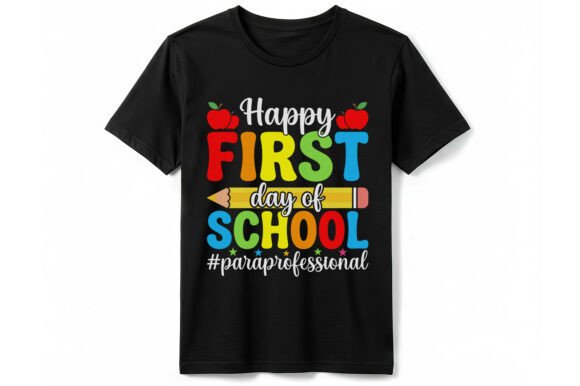
A Designer's Review of a Paraprofessional Embroidery Design
If you're in the business of crafting meaningful, seasonal products, you know that a great school-themed design is a staple. Today, I'm looking at the First Day of School Paraprofessional T-S from the perspective of someone who will actually stitch it, sell it, or gift it. This isn't just a graphic; it's a potential machine embroidery design that will live on fabric, and its success depends on how it translates from screen to stitch.
First Impressions: A Cheerful, Professional Welcome
Right off the digital page, this design evokes a specific, useful mood. It's celebratory without being childish, professional without being stiff. The combination of bold typography and classic school icons—like those red apples and that cheerful yellow school bus—creates an identity piece. It feels like a personalized gift a teacher or staff member would genuinely appreciate, or a uniform-like item a school aide would wear proudly. The layout suggests it’s built for clarity; the elements aren't overly crowded, which is a huge plus for stitching clarity.
I immediately picture this on a polo shirt for a paraprofessional, or as a central motif on a canvas tote bag for a school volunteer. It has that ready-for-the-first-day energy that sells well in late summer. As an embroidery file, its strength is in its thematic cohesion. It’s not just a phrase; it’s a complete, branded statement.
Where This Design Shines in Real Projects
Let’s talk application. I’m imagining a real scenario: a client orders five custom embroidered sweatshirts as a gift for her school's support staff. This design is a prime candidate.
- Custom Apparel: On a t-shirt or sweatshirt, the bold typography will hold up well. The size and detail level seem suited for a medium to large hoop, making it efficient for small-batch production.
- Gift & Merchandise Items: Think beyond shirts. This would be charming on a kitchen towel for a teacher’s home, a pillow cover for a classroom reading nook, or a baby item like a bib for a teacher’s new little one—a clever “first day” twist.
- Boutique & Craft Fair Products: For a small shop product, this design adds immediate value. Stitched onto a high-quality apron or a durable canvas bag, it becomes a handmade product with a clear audience, perfect for an Etsy seller targeting the education community.
- Patches & Commercial Use: As an embroidered patch, it could be fantastic. The defined shapes and colors lend themselves to clean satin stitch borders and fill stitches for the apples and bus. For a school district ordering branded items, this could be a go-to commercial embroidery asset.
The key is its versatility within a niche. It’s a craft business design with a built-in customer base.
Considerations for a Flawless Finish
No design is perfect for every scenario. Here’s where my practical side kicks in, thinking about the stitch.
On dark fabric, those vibrant colors will need careful thread selection. You’ll want to test the thread color contrast on scrap fabric first—a red apple on a black polo needs to pop, not blend. The potential for smaller details, like the bus windows or apple stems, means you need to be mindful on textured fabrics or thin fabric where dense stitches might cause puckering. Always use a proper stabilizer.
For small hoop sizes, the overall design scale matters. If you're aiming for a tiny version on a cap or a kid’s tee, check how the smaller lettering and details compress. Stitch density in the fill areas could become an issue. Similarly, on stretchy fabric, the larger blocky areas need a stable foundation to avoid distortion.
And a crucial note: the licensing for this digital embroidery file. Before you run it for finished product sales, confirm whether it's for personal use only or allows commercial projects. This step protects your customer trust and professionalism.
Designer Notes for Your Workflow
- Always do a test stitch. This reveals the true stitch density, how small details like the apples render, and whether the chosen hoop size works.
- Check it in both black and white printable mockups or actual light and dark fabric scraps. Visual appeal changes dramatically with background.
- Consider the product’s life. Items like baby clothes or kitchen towels that need frequent washing benefit from a robust stitch construction—review the design’s suitability.
- For personalized gifts, think about adding a name or year. Does the layout allow for that integration gracefully?
The Final Stitch: Building Value and Engagement
When you choose a design like this, you're investing in more than a design asset. You're investing in a product story. A well-embroidered First Day of School Paraprofessional T-S on a high-quality garment speaks to brand consistency for a maker. It shows you understand your audience—educators, parents, school supporters.
That understanding builds buyer engagement. A paraprofessional sees this on a sweatshirt and immediately connects; it’s a recognition of their role. That emotional connection boosts the perceived value and the giftability of your handmade presentation. In a crowded market, designs that resonate clearly on a practical and emotional level are the ones that sell, and sell again.
So, as a fellow designer and crafter, I see this as a strong, thematic contender. Its success hinges on your skillful application—the right fabric, the right thread, the right product pairing. Approach it with that practical, testing mindset, and it could become a repeat performer in your seasonal embroidery project lineup, from back-to-school holiday embroidery right through to end-of-year appreciation gifts. Just remember: the file on your screen is a promise; the stitches on the fabric are the proof.