Floral Teacher Leopard Print Tumbler PNG: A Designer’s Review
When a design file lands on my screen, I don’t look at it as a flat graphic. I immediately imagine how it will behave under thread, how it will read on a finished product, and whether a customer will pause and smile when they see it. That’s the lens I use for every embroidery design evaluation, and it’s exactly how I approached the Floral Teacher Leopard Print Tumbler PNG. This file isn’t a ready-to-stitch embroidery file, but a high-resolution graphic that can inspire, guide, and eventually become a beautiful machine embroidery piece when digitized correctly. For anyone who loves creating custom teacher gifts, boutique apparel, or handmade shop items, this design deserves a close, practical look.
First Impressions: A Wildly Charming Teacher Design
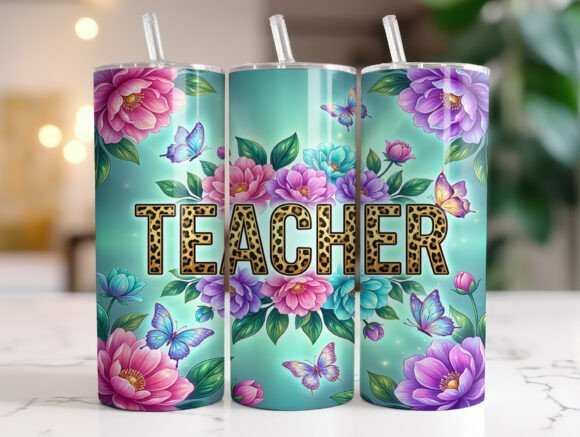
The moment I opened the Floral Teacher Leopard Print Tumbler PNG, I felt a fun, confident energy. It’s not a delicate, whispery floral—it’s bold. The leopard print backdrop gives it an edge, while the floral elements soften the overall look just enough to keep it giftable and warm. The word “teacher” is central, and the composition feels balanced. The design includes both a straight and a tapered PNG file, which means the creator already thought about different product surfaces. For a tumbler, that makes sense. But for embroidery, I immediately saw this on a tote bag, a sweatshirt, or a structured patch. The layout is self-contained, with no awkward cut-off points, and the sentiment is clear without being cliché. That’s a big win.
The Visual Mood and How It Translates to Stitch
Leopard print and florals together can be tricky. Too much of one and the design feels chaotic. Too little and it loses personality. Here, the balance is solid. The floral shapes are distinct enough to become satin stitch elements or filled appliqué sections, and the leopard spots can be interpreted as textured fill stitches or even a playful printed fabric background layered under embroidery. The mood is playful, a little sassy, and undeniably cheerful—perfect for a teacher who loves standing out. When I think about thread colors, I see rich mustard yellows, deep greens, warm terracotta pinks, and a touch of black for definition. The 300 DPI resolution means the original artwork is crisp, so a digitizer won’t have to guess at fuzzy edges. That detail matters when you’re planning stitch paths.
Where This Design Shines in Real Embroidery Projects
I’ve tested enough embroidery ideas to know that not every design fits every product. The Floral Teacher Leopard Print Tumbler PNG naturally belongs on items that can handle a medium-to-large design area and a confident visual statement. Think canvas tote bags, back of a denim jacket, a roomy sweatshirt chest, or a decorative pillow cover. It also works beautifully as a framed embroidery hoop art piece for classroom decor. The tapered PNG version is a clever inclusion—it hints at a curved surface, so a cap or a structured bag flap could be a nice home. I wouldn’t try to squeeze this onto a tiny baby onesie or a narrow pocket. The lettering and floral detail need breathing room to stitch cleanly.
The Real Case: A Teacher Appreciation Tote Bag
Let me walk through a real scenario I’m already planning. A client asked me to create a custom tote bag for her daughter’s kindergarten teacher. She wanted something personal, not a generic apple or pencil motif. I pulled up the Floral Teacher Leopard Print Tumbler PNG and showed her a mockup. She loved it instantly. I’ll be digitizing the design at about 8 inches wide, using a sturdy canvas tote in natural cotton. The background will be a light cream, so the leopard spots and floral colors pop. I plan to use a mix of satin stitch for the lettering, a tatami fill for the leopard print sections, and a subtle running stitch underlay to keep the fabric stable. The design’s size—originally 9.3″ by 8.2″—is a great starting point. I’ll scale it down slightly to fit my 10″ hoop comfortably. The high DPI of the PNG means I can resize without losing the crisp edges that my digitizing software needs to trace clean vectors.
Practical Details That Affect Stitch Quality
Before any needle hits fabric, I always check a few things. The file’s resolution is excellent, so the fine lines in the floral petals and the leopard spots are clear. That’s a huge help. But I also note that the original product is a tumbler wrap graphic, not an embroidery file. That means I have to digitize it myself or hire a digitizer. The given file includes a straight and a tapered PNG, but no embroidery-specific formats like PES, DST, or EXP. That’s fine—it just means you need to budget time for digitizing or order a custom digitized version. The listed size is ideal for a 20oz skinny tumbler, so for embroidery, I’ll test a scaled version on scrap canvas first. I always stitch out a new design on a similar fabric weight to check stitch density, thread tension, and how the small leopard spots hold up. In my experience, those tiny spots can close up if the stitches are too dense, so I’ll adjust the fill to leave a little breathing room.
Fabric and Hoop Considerations That Matter
This design isn’t a one-fabric-fits-all situation. On smooth, medium-weight cotton or canvas, it will stitch beautifully. On textured fabrics like terry cloth or loosely woven linen, the leopard spots might lose definition. I’d avoid using it on very thin or stretchy fabrics unless you’re an experienced embroiderer who knows how to use a heavy cutaway stabilizer and a basting spray. Dark fabrics will need careful thread color choices—the floral elements might need a lighter outline or a brighter palette to stand out against black or navy. I’d also recommend testing the design on a mockup in black and white to see if the contrast holds up. That’s a trick I use often: if the design still reads well in grayscale, the stitch placement will work on almost any color background.
Thread Choices and Stitch Strategy
When I look at the Floral Teacher Leopard Print Tumbler PNG, I see a design that calls for a thoughtful thread palette. The leopard print can be done with a warm tan base, darker brown spots, and maybe a touch of metallic gold for a subtle shimmer—perfect for a gratitude gift. The florals invite a mix of bright pinks, coral, and olive green. I’d avoid using a single flat color for the entire design; that would lose the wild, layered feel. A satin stitch border around the word “teacher” will make it pop, and a fill stitch with a slight angle on the leopard spots will mimic the natural direction of fur. The design’s layout is forgiving, so even if your hooping is slightly off, the composition doesn’t rely on perfect symmetry. That’s a relief for anyone who stitches production runs.
Small Business and Commercial Use Sense
For Etsy sellers, craft fair vendors, and boutique owners, this design has strong giftability. It’s specific enough to feel personal, but broad enough to appeal to any teacher who loves a bit of flair. I can see it on a canvas zipper pouch, a set of kitchen towels, or even a lightweight denim jacket. The vibe is modern, not overly cutesy, so it attracts a wide age range. When I consider customer reaction, I imagine someone saying, “Oh, that’s so her!”—which is exactly the response you want from a handmade product. The design’s personality also makes it easy to photograph for listings. A styled flat lay with a coffee cup, a few sunflowers, and a tote bag featuring this design would stop a scroller on Etsy.
As always, I remind fellow makers: before you sell finished items with this design, confirm the licensing terms. The product description says it’s an instant download PNG, but it doesn’t specify commercial embroidery rights. Reach out to the creator or check the license details. If you’re digitizing the graphic yourself, you’re creating a derivative work, so make sure you have permission to use it on products you sell.
What I’d Watch Out For
No design is perfect for every hoop and every machine. Here are a few honest cautions. The small leopard spots and delicate floral curves might be lost if you try to stitch it under 4 inches wide. I’d recommend keeping the design at least 5 inches across for embroidery. If you’re working with a 4×4 hoop, you’ll need to split the design or simplify the elements. Also, the lettering is part of the artwork, not a separate font layer, so you can’t easily replace the word “teacher” with another name without redesigning. That’s not a flaw—just a consideration if you’re thinking about personalization. The tapered PNG file is shaped for a tumbler, so if you use it directly for embroidery digitizing, you might need to straighten the edges or mask the background for a clean stitch area.
How It Elevates a Handmade Business
Using a design like the Floral Teacher Leopard Print Tumbler PNG as a springboard for embroidery projects adds a layer of professionalism to your shop. It moves you away from generic, overused teacher motifs and into something that feels curated. When customers see a unique blend of animal print and florals, they assume you put thought into your product selection. That builds trust. It also helps you stand out in the sea of “Best Teacher Ever” items. The design’s high resolution gives you flexibility for mockups, social media previews, and even sublimation if you want to combine techniques. For me, a versatile graphic like this is a smart addition to a digital library, because it can inspire multiple finished products without feeling repetitive.
Final Embroidery Designer Notes
Over the years, I’ve learned that the best embroidery starts with a graphic that has clear shapes, a distinct mood, and enough detail to guide the needle without overwhelming it. The Floral Teacher Leopard Print Tumbler PNG checks those boxes. I’ll be stitching it onto a natural canvas tote this week, with a soft cutaway stabilizer and a palette of burnt orange, mustard, and deep green. I’ll run a test stitch on scrap fabric first, check the density around the leopard spots, and then shoot a finished product photo for my client. If you’re considering this design for your embroidery projects, treat it as a creative starting point. Digitize with care, respect the original proportions, and always test on the fabric your customer will actually use. That’s how you turn a digital graphic into a stitched piece that feels intentional, polished, and full of personality.