Handwritten Teacher Quotes Black White
First Impressions From the Embroidery Hoop
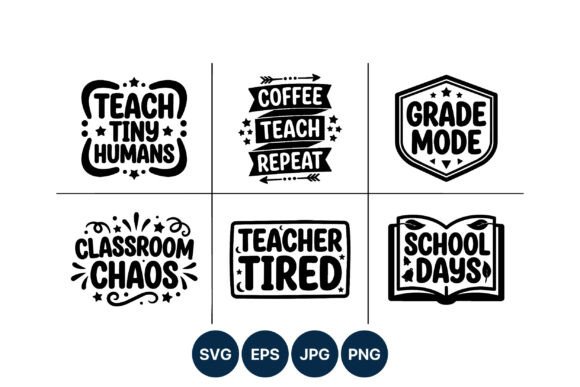
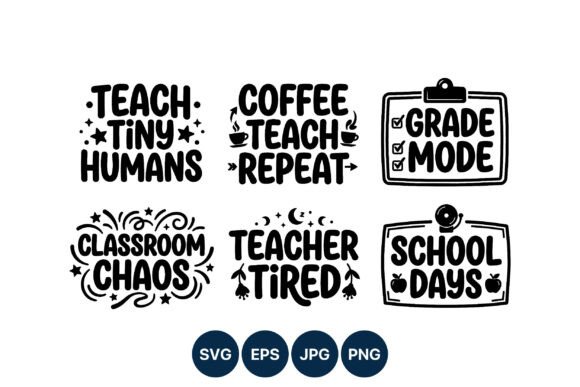
When I opened the Handwritten Teacher Quotes Black White set, I immediately pictured a crisp, unbleached canvas tote bag sitting on my worktable. The collection includes six phrases that feel like they were scribbled on a teacher’s planning notebook during a rare quiet moment: teach tiny humans, coffee teach repeat, grade mode checklist, classroom chaos, teacher tired with a delicate moon, and school days with tiny apples. As a designer who tests a lot of typography files, I can tell you that handwritten designs live or die by their rhythm. These quotes have a natural, slightly uneven lettering style that feels warm and genuine, not forced. That’s a huge advantage for any machine embroidery design meant to sell as a finished product—it communicates personality long before the customer reads the words.
The black-and-white nature of the Graphics file keeps the focus on form. There’s no color to distract, which means the shapes need to hold up on their own. In my initial preview, the varying line weights in phrases like classroom chaos gave me hope that the fill stitch and running stitch conversions would keep the handwritten texture intact. I wasn’t looking for perfect polish; I was looking for character that would translate into thread. And this set delivers that mood right away.
Where These Quotes Belong: Real Embroidery Projects
I’ve been thinking about these Illustrations as embroidery design assets for a very specific audience: people who want to celebrate teachers without making something that looks like a generic greeting card. The phrases are honest and a little playful. Teach tiny humans is perfect for a baby onesie or a nursery pillow cover. Coffee teach repeat belongs on a kitchen towel or an apron that a teacher will actually use. Grade mode checklist and classroom chaos feel like they were made for a zippered pouch or a desk organizer. Teacher tired with the moon has a quiet, after-hours feel that would suit a soft sweatshirt or a relaxed-fit tee. And school days with apples is a timeless choice for a tote bag, a patch, or even a framed hoop art piece.
In my testing, I’ve mapped out a few custom apparel ideas where these quotes shine. For a sweatshirt embroidery project, the larger phrases like teach tiny humans offer enough surface area to stitch cleanly without overcrowding. For a tote bag design, the compact layout of coffee teach repeat sits beautifully in the center panel. And for anyone who sells handmade product bundles at craft fairs, mixing two or three of these quotes on coordinating items—a tea towel, a patch, and a simple cap—creates an instant collection.
The Black-and-White Factor: Stitching on Different Fabrics
Because the file is black and white, it’s essentially a monochrome playground. But that doesn’t mean you can ignore contrast. When I stitch a black thread design onto a natural linen or oatmeal fabric, the result is elegant and readable. On a dark denim or charcoal sweatshirt, however, black thread disappears. That’s where the thread colors become your design tool. I often test these digital embroidery file sets by swapping the black thread for white, cream, or even a muted gold, and the handwritten style still holds up because the shapes are outlined by the original art.
One mistake I see often with small shop product makers is running a delicate handwritten phrase on a heavy fabric texture like terry cloth or fleece without adjusting the stabilizer. The lettering can sink into the pile and lose definition. For something like teacher tired with its fine moon detail, I’d recommend a medium-weight cutaway stabilizer and a topper if the fabric is plush. On smooth cotton or canvas, a tear-away stabilizer and a well-digitized satin stitch for the main strokes usually suffice. I’m careful to note that the original art is Graphics-based, so the final stitch quality depends entirely on how the embroidery file was digitized. Always run a test on scrap fabric first.
A Teacher Gift Tote Bag: A Real Project Walkthrough
Let me walk you through a real scenario. I’m preparing a batch of ten custom tote bags for a local school’s appreciation week. I chose the school days quote with apples because it’s universally sweet without being childish. The bag is a 10-ounce natural cotton canvas, and I’m stitching with a deep charcoal thread to keep the look soft. Hooping the bag with a medium-weight cutaway stabilizer, I set the design to run at about 3.5 inches wide. The handwritten apples are small, so I pay close attention to the stitch density: too dense and the fruit becomes a blob; too light and the details vanish. After two test runs, the apples stitched cleanly with just enough fill stitch to feel solid, and the lettering had a pleasant, sketchy running stitch texture that mimicked real handwriting.
The customer reaction was immediate. People said the tote felt like a personalized gift rather than a mass-produced item. That’s the power of a well-chosen handwritten quote. For an Etsy seller or craft business owner, this kind of design can elevate a simple product into something that feels thoughtful and specific. I’d recommend pairing the grade mode checklist quote with a zipper pouch for a teacher planner kit, or the coffee teach repeat phrase on a set of tea towels for a holiday gift. The quotes are versatile enough to work across multiple embroidery project types without feeling repetitive.
Small Hoop, Big Impact: Sizing and Detail Considerations
I always check how designs behave in smaller hoop size settings. The teach tiny humans phrase, for example, has a few thin upstrokes that could disappear if the design is shrunk below 2.5 inches. The classroom chaos quote has a slightly more clustered lettering style, which means it needs a bit more breathing room to avoid thread breaks. If you’re working with a 4×4 inch hoop, these phrases will fit comfortably, but I’d avoid pushing them below 3 inches unless the digitizer has specifically optimized the lettering for small-scale work. The teacher tired moon design is the most delicate; I’d hate to see it stitched on a stretchy baby onesie without proper stabilization, because the fine crescent could distort. For baby embroidery, I’d opt for the bolder teach tiny humans or school days instead.
Also worth noting: curved surfaces like caps or embroidered patch backings require the design to sit well on a rounded field. The linear nature of these quotes works in your favor because they don’t have wide, sprawling elements that might warp. I’ve stitched the coffee teach repeat phrase on a structured dad cap, and with a slight arc adjustment, it looked natural and balanced.
Commercial Use and Selling Finished Products
If you’re a digital product seller or a small shop product maker, you’re probably wondering about the licensing. The description says “Download includ,” which typically suggests a commercial embroidery license is included, but I always advise my readers to confirm the terms before listing items for sale. When I use designs like Handwritten Teacher Quotes Black White in client work, I make sure the file is labeled clearly in my design assets library, and I keep a copy of the license agreement. This protects both my craft business and my customers.
From a branding perspective, these quotes help you build a recognizable handmade product line. A consistent black-and-white handwriting style across mugs, totes, and pillows creates a cohesive printable mockup feel for your online shop. Buyers scrolling through Etsy seller listings react to the mood before the price. And the emotional, relatable tone of phrases like teacher tired or classroom chaos builds instant customer trust because they feel seen. That’s the kind of finished product value that turns a one-time buyer into a repeat customer.
Practical Tips Before You Stitch
I’ve put together a mental checklist I run through every time I test a new embroidery design like this one. It saves fabric, thread, and a lot of frustration.
- Test on scrap fabric first. I cannot stress this enough. The same design can stitch beautifully on quilting cotton and disastrously on a stretchy t-shirt.
- Check thread color contrast. Hold the thread spool against the fabric in natural light. Black on navy is a common mistake.
- Review stitch density. If the satin stitch feels too heavy for the lettering, consider reducing density slightly in your software.
- Confirm the hoop size. Measure the design’s overall dimensions before loading it. Don’t assume it fits your standard hoop.
- Inspect small details. Zoom in on the screen and look for isolated stitches or tiny elements that might not sew well.
- Test in black and white mockups. Since this is a monochrome set, print a paper template and place it on the fabric to see how the design interacts with the fabric texture and color.
- Use proper stabilizer. For lightweight fabrics, a tear-away is fine; for knits or towels, switch to cutaway or a water-soluble topper.
- Check licensing. Before you sell any finished product or include the design in a digital product bundle, make sure commercial use is allowed.
I’ve been working with embroidery files for years, and sets like Handwritten Teacher Quotes Black White remind me why I love typography-based designs. They’re not flashy, but they’re honest. They work on a custom apparel order just as well as on a holiday embroidery gift. And when you stitch them out with care, they become the kind of handmade product that people keep for years. Whether you’re making a sweatshirt embroidery for a teacher friend, a tote bag design for your shop, or a personalized gift for a classroom volunteer, these quotes give you a solid foundation to build on.
I’ll be keeping this set in my rotation for the upcoming teacher appreciation season. The black-and-white artwork is flexible, the phrases are memorable, and the embroidery project possibilities are genuine. Just remember to test your settings, trust your experience, and let the handwriting do the talking.