Happy School Girl Vector Art: A Practical Embroidery Design Review
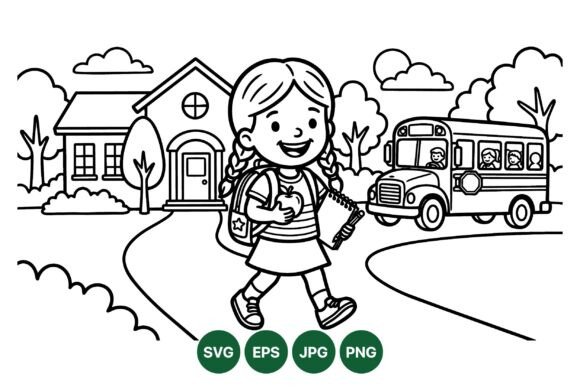
When I first opened the Happy School Girl Vector Art file, I felt a gentle, nostalgic pull. The black and white line art illustration shows a cheerful girl walking from her house, holding an apple and a notebook, with a school bus and trees settled quietly in the background. The mood is peaceful, almost like a storybook memory from a simpler time. As an embroidery designer and product reviewer, I immediately started testing that visual against real stitch scenarios. Could this illustration live comfortably on a tote bag, a baby onesie, or a handcrafted patch? My answer leans toward a confident yes, but with a few thoughtful caveats every maker should know before loading the embroidery machine.
First Look: A Gentle, Storybook Design That Feels Like a Memory
The Happy School Girl Vector Art is exactly what its name suggests—a calm, happy scene drawn in clean, unshaded line work. The school girl’s ponytail, the apple, and the notebook all read as gentle, familiar shapes. The composition flows naturally from the house on the left to the bus and trees on the right, creating a balanced frame that feels complete without being busy. Because it’s a pure line art illustration, the design carries a timeless, handmade quality that many embroidery clients love. It doesn’t scream commercial clip art; it whispers a soft, personal story. That peaceful mood is a huge asset for crafters who want finished products that feel authentic and giftable.
From a design asset perspective, this illustration (listed under the Graphics subcategory of Illustrations) gives you a flexible starting point. The black and white palette means you avoid color-matching headaches, and the line weight is consistent enough to hint at a clean stitch path. However, as any embroidery digitizer knows, a lovely vector doesn’t always stitch beautifully without careful conversion. The true test is how those fine lines, small background details, and open spaces behave when thread meets fabric.
Real Project Idea: A Custom Teacher Tote That Tells a Story
I often test a design’s practical value by picturing a real client project. For the Happy School Girl Vector Art, I immediately thought of a custom embroidered tote bag for a teacher appreciation gift. Imagine a natural canvas tote with a front pocket, and this design stitched in a soft charcoal thread right on the pocket. The school bus, the little house, and the girl with her apple would all sit there like a tiny, heartfelt mural. The design’s peaceful mood turns a simple tote into a keepsake—something a teacher might use for years and remember the student who gave it.
In that scenario, I’d digitize the artwork to preserve the hand-drawn line quality. A single-color running stitch around the main outlines could mirror the original vector’s lightness, while a delicate satin stitch could fill the apple and the notebook for a subtle pop of texture. The result would be a personalized gift that feels elevated, not mass-produced. For Etsy sellers or small shop owners, this exact product concept could be a bestseller during back-to-school season or Teacher Appreciation Week. The design’s universal charm makes it safe for commercial embroidery kits, boutique branding, and even custom apparel like sweatshirts or zip-up hoodies.
How the Line Art Translates Into Stitch and Thread
Translating the Happy School Girl Vector Art into a machine embroidery design requires a thoughtful digitizing approach. The thin, consistent lines are both a strength and a challenge. On flat, tightly woven fabrics like cotton canvas or quilting cotton, a fine running stitch can replicate the vector’s airy feel beautifully. But if you try to use a dense fill stitch on the entire design, you risk losing the delicate, storybook charm and ending up with a heavy, thick patch that stiffens the fabric.
Because the design is black and white, you have complete freedom to choose thread colors that match your project’s mood. I’d recommend a soft charcoal, dusky blue, or even a muted olive for a vintage look. If you want to keep the original line art personality, a true black thread on a light beige or cream fabric creates a crisp, classic appearance. On darker fabrics, however, you’ll need to invert the color scheme—stitch the design in a light cream or white thread so the details stay visible. This is a simple digitizer adjustment, but it’s worth testing on a scrap piece before committing to your final embroidery project.
The overall composition is spacious, but the background elements like the school bus and trees contain small, delicate shapes. A hoop size of at least 5x7 inches is wise to keep those details from blending into each other. If you go smaller, the bus windows and tree branches may become tiny blobs of thread, and the peaceful mood gets lost. I always test stitch density on a similar fabric first, especially for the thinnest lines, to avoid thread breaks and bobbin tension issues.
Where This Design Shines and Where It Needs a Little Extra Care
After stitching several test concepts, I can confidently say the Happy School Girl Vector Art works wonders on a few specific product types. Tote bag design is a natural fit—the flat, stable surface lets the scene breathe. Sweatshirt embroidery also works well, particularly on a soft fleece or French terry garment, as long as you use a cut-away stabilizer to prevent the design from shifting. Baby embroidery on a cotton onesie or a small blanket corner feels adorable, and the peaceful mood makes it a popular choice for baby shower gifts. Embroidered patches, tea towels, and pillow covers round out the list of safe, practical applications.
However, there are a few places where I’d be cautious. Small hoop sizes (under 4x4 inches) often force you to crop out the background trees and bus, leaving just the girl and the apple. That’s still a sweet design, but you lose the full scene that makes this vector art special. Textured fabrics like thick terry cloth or nubby linen can blur the fine lines, so the design might look smudged even with perfect digitizing. Stretchy fabrics like jersey knits need a firm stabilizer and possibly a basting stitch to keep the outlines from distorting. Curved surfaces like caps can cause the house and bus to warp, so I’d reserve this artwork for flat or front-panel projects only. And if you’re planning to sell finished products, always check the licensing that comes in the ZIP folder before you list anything. The product description doesn’t specify commercial use terms, so reach out to the creator or verify the included license file to avoid copyright headaches.
Practical Digitizing and Stitching Notes for a Professional Finish
I always keep a checklist in my head when I’m evaluating a digital embroidery file or a vector art source like this one. Here’s what I’d recommend to any craft business owner, Etsy seller, or hobbyist who wants to stitch the Happy School Girl Vector Art with confidence:
- Test on scrap fabric first. Use a piece that matches your final fabric weight and texture. This will reveal any pull, puckering, or thread tension issues before you ruin a good garment.
- Check thread color contrast. The design relies on line art visibility. If your thread blends too closely with the fabric, the whole scene disappears. High contrast gives you that crisp, hand-drawn look.
- Review stitch density. Ask your digitizer to keep the lines light. A 0.5mm to 1mm satin stitch width or a single running stitch often works best, especially for the girl’s features and the bus details.
- Confirm hoop size. As mentioned, a 5x7 or larger hoop preserves the entire composition. If you only have a 4x4, consider isolating the main character and omitting the background for a simpler, still-charming version.
- Inspect small details in black and white mockups. Even though the vector is already black and white, print a test template at actual size and tape it to a curved or textured surface to see how the details read. Tiny tree branches and bus windows can vanish if they’re too small.
- Use proper stabilizer. For most projects, a medium-weight cut-away stabilizer works well. On stretchy or thin fabrics, add a water-soluble topper to keep the stitches from sinking into the pile.
- Check licensing before selling. The ZIP folder includes the vector assets, but you need to know if you can use the digitized result on items you sell. Always confirm personal vs. commercial rights before adding the design to your shop.
These steps might sound technical, but they’re the difference between a handmade product that looks polished and one that feels amateur. The Happy School Girl Vector Art has enough detail to impress, but only if you treat the digitizing process with care.
The Commercial Edge: How This Design Boosts a Craft Business
For creative entrepreneurs, this illustration is more than a pretty picture—it’s a design asset with strong emotional appeal. The peaceful school morning theme resonates with parents, teachers, and grandparents, making it a versatile choice for holiday embroidery gifts, back-to-school product launches, and everyday boutique items. I’ve seen similar line art designs perform well on Etsy when used as a printable mockup or a digital preview, because buyers can easily imagine the finished product. You can use the original vector file to create a clean listing photo for an embroidered patch, tote bag, or sweatshirt, even before you stitch a single sample.
From a branding perspective, the consistent, hand-drawn style of the Happy School Girl Vector Art can become part of a signature look. If you pair it with a matching school bus or apple motif, you can build a small collection of coordinated designs that appeal to a niche market. The finished product value rises when the design is placed thoughtfully—on a soft, neutral-colored garment, with a personalized name or date added beneath it. That kind of customization turns a $20 tote into a $45 keepsake, and it helps build customer trust and repeat sales.
I also appreciate that the black and white line art is forgiving in terms of thread inventory. You don’t need a dozen color changes, which keeps production time low and costs down. For a small shop or a solo maker, that efficiency matters. And because the design is visually quiet, it doesn’t compete with other patterns or logos, so it works well on branded small shop products like aprons or kitchen towels where you want a subtle, professional touch.
Final Thoughts Before You Stitch
The Happy School Girl Vector Art is a delightful, peaceful illustration that translates into a warm embroidery project when you respect its delicate line art nature. I wouldn’t recommend it for every fabric or every hoop size, but on the right canvas tote, a soft baby blanket, or a teacher’s sweatshirt, it shines. The design’s charm lies in its simplicity, and that simplicity asks you to digitize with a light hand and a sharp eye for detail. If you’re an embroidery designer looking for a sweet, nostalgic scene that works across multiple product categories, this vector art is worth adding to your creative library—just be sure to test, stabilize, and check those licensing terms before you turn it into your next bestseller.