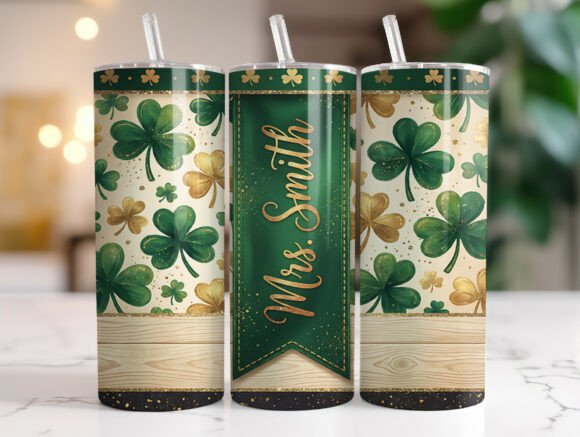
Lucky Clover Teacher 20oz Tumbler Wrap: Embroidery Design Review
First Impressions: A Charmer Built for Teacher Gifts
When I first opened the Lucky Clover Teacher 20oz Tumbler Wrap digital file, the mood struck me immediately. It’s cheerful without being childish, and thoughtful without being overly sentimental. The design leans into a lucky clover motif paired with a teacher theme — a combination that feels fresh, especially for end-of-year gifts, appreciation weeks, or classroom thank-you projects. As someone who digitizes for embroidery and handcrafts boutique items, I could instantly picture this design translated into a stitched piece. The visual personality is clean, feminine, and gently whimsical. It’s the kind of artwork that makes a customer smile before they even look closely at the stitch quality.
Because this is a Graphics file — specifically a Tumbler Wraps printable — it’s not an embroidery file out of the box. But the composition, sizing, and resolution (9.3″ x 8.2″ at 300 DPI) immediately told me it could be a strong candidate for digitizing. The layout feels balanced, with central focal elements that would translate well into a machine embroidery design. No awkward tangles of tiny detail, no impossible gradients. In my mind, I was already planning the thread palette.
How This Design Works in Real Embroidery Projects
I always test a concept by imagining it on a finished product I’d actually sell or gift. For the Lucky Clover Teacher 20oz Tumbler Wrap, I mentally placed it on a natural canvas tote bag — the kind a teacher might carry to school filled with supplies. The design’s size is generous, which means it would sit beautifully on the center front of a tote, or as a large back piece on a denim jacket. Because the artwork is a straight PNG and tapered PNG, I had to consider how the shape would adapt to embroidery. The straight version provides a clean rectangular boundary, while the tapered one offers a more dynamic contour — that tapered format could be especially interesting as an embroidered patch or a decorative element that follows the curve of a cap.
Here’s where the design shines in embroidery:
- Custom apparel: A sweatshirt with this design stitched across the chest in soft pastel threads would feel personal and giftable. I’d recommend a lightweight fleece fabric to keep the stitch density comfortable.
- Tote bags and aprons: The design’s lucky clover theme suits a kitchen apron or a gardening tote. A teacher who loves plants or green accents would adore this.
- Pillow covers and tea towels: For home décor, the design could be downsized slightly and placed in a corner. Imagine a linen pillow cover with a crisp, understated version of the clover teacher motif.
- Patches and caps: The tapered version is practically begging to become an embroidered patch. I’d finish it with a merrowed edge and sell it as a standalone product or a cap accent.
- Baby and nursery items: Softened color choices make this a sweet addition to a baby blanket or a growth chart. The clover symbol feels lucky, protective, and tender.
Honest Talk About Where to Be Cautious
No design is perfect for every canvas. The Lucky Clover Teacher 20oz Tumbler Wrap has parts that require thoughtful embroidery adaptation. I’ll walk you through what I’d watch for.
Small Hoop Sizes and Tight Spaces
The listed dimensions are 9.3″ x 8.2″. That’s a mid-to-large size for a single embroidery design. If you’re working with a 4×4 inch hoop, you’ll need to scale the artwork down significantly — and that’s where trouble can start. Tiny lettering, if the design includes any, could become illegible under satin stitches. Even the clover leaves might lose their crisp shape. I’d advise against using this design on anything smaller than a 5×7 hoop, and even then, only after careful test stitching. For hats or curved surfaces, the tapered version may help, but you’ll still need to respect the curvature and avoid distortion.
Fabric Choices That Demand Extra Care
Stretchy fabrics like performance tees or thin knits can warp the design during stitching. I’d use a cut-away stabilizer and a basting spray to keep everything secure. Dark fabrics present another challenge: the design’s delicate details might disappear if thread colors aren’t chosen with high contrast. I always test a mockup on black and on white backgrounds before committing to a final thread palette. Textured fabrics like terry cloth or waffle weave can break up the clover’s smooth lines, so I’d avoid those for detail-heavy parts.
Dense Areas and Decorative Accents
If the original PNG includes layered or shaded elements, a digitizer must be strategic. Converting a 300 DPI printable into a stitch file often means simplifying small decorative accents. I’d want to keep the clover’s veining and any teacher-related icons crisp, but not at the expense of a bulletproof stitch-out. Fill stitches with a slight underlay will help, but too much density can make the finished product stiff and uncomfortable — especially on baby items or wearables. This is the kind of design that benefits from a test run on scrap cotton before a single customer sees it.
Visual Appeal and Customer Perception
What makes the Lucky Clover Teacher 20oz Tumbler Wrap stand out as a potential embroidery project is its emotional clarity. Customers don’t buy stitches; they buy feelings. A teacher seeing this design on a tote bag feels recognized, appreciated, and a little bit lucky. The clover motif is universally associated with good fortune, and tying it to the teaching profession creates a warm, positive message. That’s the kind of visual narrative that boosts product value and justifies a higher price point for handmade goods.
In my own shop, I’d market finished items made from this design as “thoughtful teacher gifts” rather than just “embroidered shirts.” The design itself elevates the product’s presentation. When I photograph a finished piece, the clover’s shape and the teacher theme immediately tell a story — no lengthy description needed. For Etsy sellers, that’s a powerful advantage. Listings with this design would naturally attract buyers looking for appreciation gifts, end-of-year presents, or even just a cheerful tote bag for themselves.
Practical Designer Notes for a Smooth Workflow
Because this is a digital file, not a ready-to-stitch embroidery file, I’ll outline the steps I’d follow before using it in any commercial project. These are the same habits I’ve built over years of trial and error.
- Check the file type and resolution: The download includes 1 straight and 1 tapered PNG, both at 300 DPI. That’s excellent for clean digitizing. I’d open the files in my embroidery software and trace the main shapes, simplifying where needed.
- Test thread colors on scrap fabric: I’d pick a palette that works on both light and dark backgrounds. A soft sage green, a warm cream, and a muted gold often flatter the teacher theme. Avoid neon greens unless you know your audience loves them.
- Review stitch density: After digitizing, I’d run a preview. If the clover leaves look too heavy, I’d reduce the density by 10–15% and add a light underlay to keep the shape stable.
- Confirm hoop size: The full 9.3″ x 8.2″ design needs a large hoop. For smaller projects, I’d crop or scale the design, but always test the legibility of any text-like elements.
- Stabilizer selection: For tote bags and sweatshirts, a medium-weight cut-away stabilizer works best. For delicate fabrics like baby onesies, I might use a fusible no-show mesh to prevent irritation.
- Mockup in black and white: I always create a grayscale version of the design to see if the contrast holds. A design that relies on color alone can fail on certain fabrics.
Licensing and Commercial Use Clarity
Since the Lucky Clover Teacher 20oz Tumbler Wrap is sold as a digital printable, the license terms are not automatically the same as those for embroidery files. As a designer, I never assume. I’d reach out to the seller and ask: “Can I use this graphic to create a digitized embroidery design, and then sell the finished embroidered items?” Some sellers allow it, some don’t. If I plan to sell the digitized embroidery file itself, I’d need explicit permission. Protecting my small business means never guessing on licensing. The same goes for using the design on products I sell on Etsy or at craft fairs. Transparency keeps my brand trustworthy.
Where This Design Feels Most at Home
After all my mental test runs, I keep coming back to one scenario: a custom canvas tote bag, embroidered with the tapered version of the Lucky Clover Teacher 20oz Tumbler Wrap. The background is a natural off-white, and the threads are a soft olive, a dusty rose, and a touch of metallic gold for the lettering. The tote is lined, sturdy, and finished with a little leather tag. It’s the kind of gift a teacher would actually carry, not just stash in a closet. That’s the ultimate test for any embroidery design — does it become part of someone’s daily life? This one, I believe, can.
For craft business owners and Etsy sellers, the design bridges the gap between a quick printable and a meaningful handmade product. The lucky clover theme gives it seasonal flexibility, too — perfect for St. Patrick’s Day, spring teacher appreciation, or year-round gratitude gifts. Even as a Tumbler Wraps graphic, it’s clear the artwork was created with a soft, emotive touch. That same quality makes it a joy to transform into an embroidery project. I’ll be adding this one to my idea folder, and I’d encourage any maker with a good digitizing partner to do the same.