Teacher Reading Book Silhouette: A Designer's Review
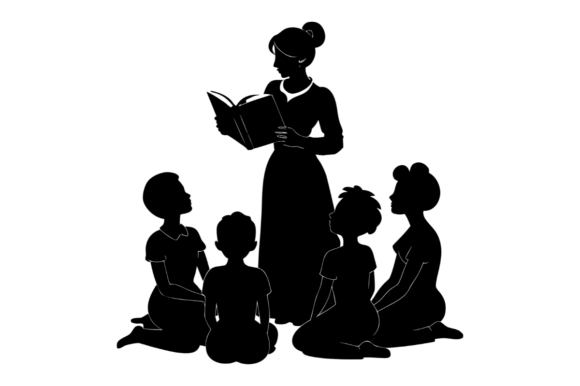
Some designs walk into your workspace and immediately tell you where they belong. The Teacher Reading Book to Silhouetted Children graphic is one of those. Before I even opened the file, I could picture it stitched onto a natural canvas tote bag, the kind a teacher would carry to school every morning, filled with graded papers and a well-worn paperback. There is a quiet, storytelling quality to this silhouette collection that feels less like a generic clip art asset and more like a moment captured in thread.
The first thing I noticed was the composition. A standing figure leans slightly forward, book in hand, while several smaller seated shapes form a half-circle around the reader. The silhouettes are clean, the proportions feel natural, and the negative space between the figures lets the scene breathe. This is not a cluttered design that will turn into a muddy mess when reduced to a standard embroidery hoop size. It reads clearly at a glance, which is exactly what you want when your finished product will be seen from across a classroom, a craft fair table, or a busy coffee shop.
As someone who has tested hundreds of vector files in real embroidery projects, I pay attention to how a design translates from screen to fabric. A silhouette like this one relies on contrast and shape recognition. There are no facial expressions, no intricate linework, no color gradients to hide behind. The storytelling has to come purely from posture and placement. And this design delivers. You can almost hear the story being read aloud. That emotional pull is what makes a handmade product feel intentional rather than just decorated.
Why This Silhouette Works for Embroidery Professionals
Silhouette designs hold a special place in machine embroidery. They are punch-friendly, they read well at multiple sizes, and they do not demand complex thread changes or color blending. The Teacher Reading Book to Silhouetted Children graphic fits squarely into that sweet spot. The shapes are distinct enough that a satin stitch outline or a solid fill stitch will preserve the scene without distortion. Even the seated children, though smaller in scale, maintain enough separation from each other to avoid becoming one shapeless blob during stitching.
One thing I always check before committing to a design is whether the details will survive the digitizing process. Thin gaps between figures, tiny protruding elements, and overly delicate curves can cause headaches later. In this collection, the figures are thoughtfully spaced. The teacher's arm holding the book extends outward with a clear break from the torso, and the book itself is a recognizable rectangle rather than an ambiguous shape. Those kinds of structural decisions matter when you are the one troubleshooting a test stitch at eleven o'clock at night before a craft deadline.
The mood of the piece is worth noting too. It leans sentimental without being saccharine. The silhouetted children are attentive, the teacher is engaged, and the whole scene suggests a shared love of reading. That makes it an easy fit for a wide range of products aimed at educators, librarians, parents, and literacy advocates. It also opens the door to thoughtful gift items that feel personal and story-driven.
A Real-World Project: The Teacher Appreciation Tote
Let me walk you through a practical scenario. A customer reached out asking for a custom embroidered tote bag as a year-end teacher appreciation gift. She wanted something heartfelt but not overly cute, something the teacher could actually use without feeling self-conscious. I showed her a few options, and the moment she saw the Teacher Reading Book to Silhouetted Children design, she said, "That is exactly her."
I stitched the design onto a medium-weight cotton canvas tote in a deep charcoal thread against the natural fabric. The contrast was striking. The silhouette held its shape beautifully, and the scene felt grounded and warm. I used a medium-weight cutaway stabilizer, which I would recommend for any project involving this design on a woven fabric. The stitch density was moderate, and the design did not pull or pucker the canvas. The finished tote looked like something you would find in a thoughtfully curated boutique, not a rushed last-minute gift.
That project reinforced something I already suspected about this artwork: it works best when the embroidery is treated as the focal point. Place it prominently on the front of a tote bag, center it on a pillow cover, or let it anchor a sweatshirt back. It does not need supporting text or extra embellishments to make an impact. The narrative is already complete.
Where This Design Shines Brightest
Based on my testing and professional experience, here are the product categories where the Teacher Reading Book to Silhouetted Children graphic truly excels:
- Teacher appreciation gifts: tote bags, zippered pouches, canvas book bags, and embroidered bookmarks feel natural and meaningful with this scene.
- Nursery and children's decor: pillow covers, wall hangings, crib sheets, and soft fabric panels benefit from the gentle, storybook quality of the silhouette.
- Library and bookstore merchandise: small shops can use this on aprons, staff shirts, book sleeves, and promotional totes to reinforce a reading-focused brand identity.
- Literacy event products: read-a-thon prizes, volunteer thank-you gifts, and book fair merchandise all align well with the design's theme.
- Personalized family gifts: a grandmother who reads to her grandchildren, a parent who cherishes bedtime stories, or a retiring teacher would all connect with this imagery.
The Illustrations category placement makes sense here because the artwork functions as a standalone visual narrative. It is not a decorative border or a supporting accent. It is the main event. And in the Graphics space, this level of emotional clarity is harder to find than you might expect. Many silhouette packs feel generic or stiff. This one has a natural flow that suggests the figures were composed with real human interaction in mind, not just geometric placement.
When to Proceed With Care
No design is perfect for every situation, and honest evaluation means flagging the scenarios where you should pause and test before committing to a full production run.
Small hoop sizes are the first consideration. The seated children are smaller figures, and if you try to squeeze this entire scene into a 4x4 inch hoop, you will lose the finer separations between the figures. I recommend staying at a 5x7 inch hoop or larger for the full composition. If you need a smaller version, consider cropping to just the teacher and one or two children, though that does change the storytelling dynamic.
Stretchy fabrics like performance tees or thin jersey require extra attention. The solid fill areas of a silhouette design can feel heavy on lightweight knits, leading to puckering or a stiff hand feel. Use a quality no-show mesh stabilizer and consider a water-soluble topper to keep the stitches from sinking into the fabric. Test on a scrap piece first, especially if you are planning a run of baby onesies or thin cotton tees.
Dark fabrics present a contrast challenge. If you stitch a dark thread on a dark background, the scene loses its readability. The design relies on a clear value difference between the thread and the fabric. On black or navy garments, a lighter thread color works beautifully, but it shifts the mood from warm and grounded to more graphic and modern. That is not a flaw, just a stylistic choice you should make intentionally.
Curved surfaces like caps and hats can distort the horizontal flow of the seated children. The half-circle arrangement naturally widens the composition, and wrapping that around the curved front of a baseball cap may cause the outer figures to angle awkwardly. If a cap project is non-negotiable, consider using only a portion of the scene or reorienting the design to fit the vertical space better.
Practical Embroidery Designer Notes
I have learned over the years that the difference between a professional finished product and a disappointing one often comes down to preparation, not talent. Here are the steps I take before using a design like this in a paid project:
- Run a test stitch on matching fabric. Even if the design looks perfect on screen, fabric texture, thread tension, and stabilizer choice will change the outcome. A scrap test saves you from ruining a finished garment.
- Check thread color contrast in natural light. What looks crisp under your sewing lamp may look washed out in daylight. Hold the test stitch up near a window before committing.
- Review stitch density. AI-generated artwork refined for embroidery should have appropriate density, but you should still verify that the fill areas are not so dense that they create a bulletproof patch on a soft garment.
- Inspect small details at actual size. The spaces between the seated children are critical. Print a paper template at full scale and place it on the product to see if the details hold up.
- Test in black and white. A quick grayscale mockup or a printed paper version helps you see whether the silhouette shapes remain distinct without the distraction of color.
- Use proper stabilizer for the fabric type. Woven cotton canvas, denim, and linen can handle a cutaway stabilizer. Stretchy or thin fabrics need a different approach. Do not skip this step.
- Confirm licensing before selling. The product description notes this is a collection of AI-generated silhouette vector designs that have been carefully refined and professionally edited. Always verify that your intended use, whether personal projects, client gifts, or commercial products for sale, aligns with the licensing terms provided by the seller.
How This Design Strengthens Your Product Line
From a business perspective, the Teacher Reading Book to Silhouetted Children design offers something valuable: a clear emotional hook that customers recognize immediately. When someone scrolls through an Etsy listing or browses a craft fair booth, they make split-second decisions based on feeling. A well-executed silhouette of a teacher reading to children triggers memories, nostalgia, and a sense of connection. That is the kind of design that stops a scroll and starts a conversation.
For handmade shop owners, this translates into higher perceived value. A product with a thoughtful, narrative-driven embroidery design feels more intentional than one with a generic floral or geometric pattern. It tells the buyer that the maker cares about meaning, not just decoration. And that perceived value supports higher price points and repeat customers.
For digital product sellers, this silhouette collection works well in printable mockups, design previews, and branding assets. The clean lines photograph well, the scene is easy to understand at thumbnail size, and the theme has broad appeal across multiple niches. Whether you are showcasing a new embroidery file, creating a listing photo for a custom tote, or building a brand identity around literacy and education, the artwork pulls its weight.
Final Thoughts Before You Stitch
I have worked with enough embroidery designs to know that a truly good one makes the project feel easier, not harder. The Teacher Reading Book to Silhouetted Children graphic falls into that category. It is not fussy, it does not demand constant adjustment, and it communicates its message clearly. The design feels like it was made for fabric, not just for a screen.
That said, treat it with the same care you would give any design you plan to sell or gift. Test it on the actual fabric you will use. Check the small details. Choose thread colors that honor the silhouette's quiet strength. And when you see the finished product, whether it is a tote bag slung over a teacher's shoulder or a pillow resting in a reading nook, you will understand why this design resonates. It captures a moment that matters, and in handmade business, those are the moments your customers remember.