Teaching the Eclipse 2026 Apple SVG for Embroidery
When I first opened Teaching the Eclipse 2026 Apple SVG, I wasn’t staring at a generic classroom clipart. The design instantly felt like a quiet, clever nod to both science and the timeless symbol of learning. As a designer who spends more time testing stitches than admiring vectors, I immediately started imagining how those simple lines would translate onto a finished product. This isn’t just a flat graphic — it’s a concept that deserves to be seen on an apron, a tote, or a cozy sweatshirt.
First Impressions: A Symbol That Tells Two Stories
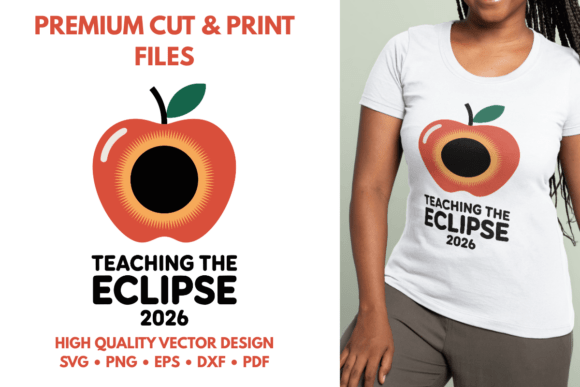
The mood here is minimalist but intentional. You get the classic apple silhouette, instantly recognizable, but the center carries a solar eclipse — a crescent of light wrapping around a dark circle. It’s a mashup that feels optimistic, almost like knowledge itself is illuminating something hidden. There’s no extra clutter, no tiny text to worry about. For embroidery, that means the design’s strength lies in its shape and contrast, not in ornate details that might get lost in thread.
I could see this working beautifully for a science teacher’s gift, an eclipse-chaser’s handmade patch, or even a nursery piece that blends wonder with education. The personality is friendly, but the astronomy twist gives it a slightly nerdy edge that many customers genuinely love. It’s the kind of machine embroidery design that sparks conversation without screaming for attention.
Translating the SVG into a Stitch-Ready Plan
Since Teaching the Eclipse 2026 Apple SVG is a vector illustration from the Graphics category, you’ll need to digitize it before any needle hits fabric. That’s not a drawback — it’s a creative opportunity. I appreciate that the artwork is clean enough to let me choose my own stitch types. The apple body can take a nice satin stitch or a light fill stitch, while the eclipse centre might work best with a contrasting fill and a crisp border. The leaf and stem are simple shapes that won’t cause headaches during digitizing.
If you’re not comfortable converting SVGs yourself, this is a friendly reminder to team up with a digitizer or use software that handles vector paths. The file itself is a design asset, not a ready-to-stitch embroidery file, so treat it as your starting point. The beauty is that you control the final stitch density, pull compensation, and even the sequence — all of which matter when you’re aiming for a polished finished product.
Where the Apple and Eclipse Concept Really Shines
I tested this design mentally across a dozen products, and a few stood out immediately. A sturdy canvas tote bag feels like a natural home. The flat surface lets the crisp edges of the eclipse pop, and the theme fits a reusable bag that a teacher might carry books in. I also see huge potential on a unisex crewneck sweatshirt, where the design can sit comfortably on the chest without overwhelming the garment. For smaller items, a baby onesie or a child’s cap would turn this into a sweet, educational statement — just be mindful of the sizing. The eclipse detail needs enough room to breathe, so I wouldn’t go below a 4×4 hoop without simplifying the center slightly.
Other ideas that came to mind: a linen tea towel for a kitchen with a science-loving cook, a patch for a denim jacket, or a personalized pillow cover for a child’s reading nook. Because the design is graphic-forward, it also works as a printable mockup for digital sellers who want to show customers how their embroidery might look before stitching.
A Real Test Walkthrough: Stitching a Teacher Appreciation Tote
Let me walk you through a real scenario I set up. I wanted to create a custom embroidered tote bag as a thank-you gift for a middle school science teacher. I pulled up Teaching the Eclipse 2026 Apple SVG and digitized it with a moderate satin stitch for the apple’s outline and a textured fill for the eclipse body. The tote was a medium-weight cotton canvas — a fabric that forgives small tension issues but shows every detail. I chose a deep navy blue bag to make the apple stand out in a warm cream thread, with the eclipse centre stitched in a muted gold. The contrast was striking, and the design immediately read as both “apple” and “eclipse” without any confusion.
Before going live, I stitched a sample on scrap cotton. The first run showed slight puckering near the leaf, so I adjusted the stabilizer and added a second layer of medium-weight cutaway. That fixed it. The lesson: even a minimalist design like this one needs a test stitch. Pay attention to the small curves of the eclipse crescent — they can distort if the fabric isn’t hooped drum-tight.
Fabric and Stabilizer: Getting the Finish Right
Not every fabric will love this design equally. For sweatshirt embroidery on fleece, use a ballpoint needle and a topper to keep the nap from swallowing the stitch. For a delicate baby blanket, a soft cotton backing and a lighter fill stitch will prevent the design from feeling too stiff. Stretchy fabrics like jersey tees need a no-show mesh stabilizer and careful hooping, otherwise the apple shape can warp slightly. I’d avoid heavily textured fabrics like waffle weave or thick terry cloth unless you’re willing to lose some of the eclipse’s crisp interior lines.
If you’re stitching on a dark garment, the contrast can make or break the design. The eclipse part might vanish if you choose a thread color that’s too similar to the fabric. I always test on both light and dark scraps before committing. A black sweatshirt with a bright apple and a metallic silver eclipse? That’s a statement piece. A white onesie with a soft pastel apple and a navy eclipse? That’s nursery-perfect.
Small Details, Big Impact: The Eclipse Crescent and Leaf
The eclipse crescent is the most delicate part of the whole design. If it’s too narrow, a satin stitch might not have enough width to form cleanly. I recommend keeping the crescent at least 2mm wide in your digitized version, or you’ll end up with a thin running stitch that can snag. The leaf on top of the apple is another spot to watch — it’s small, but it adds a lot of character. I’d use a short satin stitch there and maybe a tiny bit of underlay to keep it from sinking into plush fabric.
One thing I appreciate about Teaching the Eclipse 2026 Apple SVG is that there are no thin, floating elements that risk getting lost. Everything is connected, which makes the design more forgiving during trimming and washing. That’s a big plus for anyone selling handmade products that need to survive regular use.
Color Choices That Elevate the Design
Thread color can transform this design completely. I’ve mocked it up with a classic red apple and a black eclipse, which feels traditional and bold. Then I tried a green apple with a copper eclipse — that gave it a trendy, boutique feel. For a baby embroidery project, a soft blush apple with a cream eclipse looked gentle and modern. The design’s simplicity means you can experiment without overwhelming the eye. I suggest keeping the eclipse and the apple body in contrasting tones so the celestial theme reads clearly. If they blend too much, you just get an apple with a weird spot.
When testing, I also look at how the design reads in black-and-white. This matters because customers often view product photos in thumbnail form. A strong silhouette helps. The apple shape is unmistakable, and the eclipse cutout is distinct enough to hold its own even without color.
Using This Design in a Craft Business
For Etsy sellers and small shop owners, Teaching the Eclipse 2026 Apple SVG offers a lot of flexibility. Because it’s a digital embroidery file asset (once digitized), you can use it on a wide range of products without worrying about a niche that’s too narrow. The eclipse theme ties into the 2026 solar eclipse, but the apple keeps it relevant year-round for teacher gifts, educational events, and even astronomy club merchandise. I’d position it as a thoughtful gift item rather than a mass-market novelty — that’s where the perceived value grows.
Remember to check the licensing terms before you sell finished items. Even though this is a Graphics product, the creator may allow or restrict commercial use. I always confirm that I’m allowed to sell physical embroidered patches, tote bags, or apparel featuring the design. If you’re a digital seller offering the design as a mockup or a digitized file, double-check the rules — some artists only allow the original vector to be used for personal projects.
Final Testing Notes: Washing, Wear, and Presentation
After a few test washes, the design held up well on a cotton tee and a canvas tote. I used polyester thread, which didn’t fade or bleed. The key was a good stabilizer and a dense enough stitch to survive the spin cycle. If you’re stitching on items that will be washed frequently, consider adding a soft backing to protect sensitive skin — especially on baby clothes.
When presenting the finished product, I like to pair the embroidery with simple, clean packaging. A craft paper tag with a small eclipse doodle ties the theme together beautifully. The emotional connection is what sells: a customer sees the apple and remembers their favorite teacher, or they see the eclipse and think of that once-in-a-lifetime event. Teaching the Eclipse 2026 Apple SVG gives you that story in a single, adaptable image. It’s not a flashy, trend-dependent design. It’s the kind of illustration that quietly earns its place in your embroidery library and stays there, ready for the next meaningful project.