Cute School Girl Hold Blank Paper in Hand Review
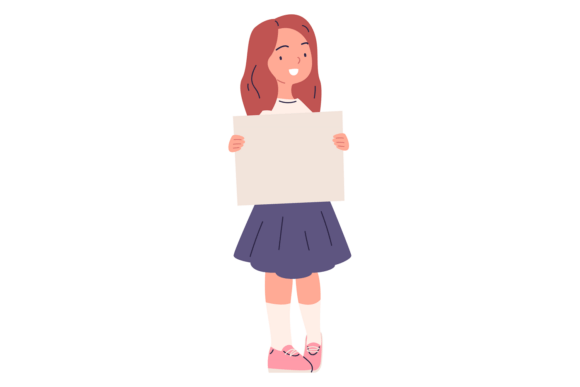
When I first opened Cute School Girl Hold Blank Paper in Han, I immediately felt that familiar spark of possibility. This is the kind of illustration that makes you pause and mentally scroll through your product catalog, imagining where it would shine brightest. The artwork presents a sweet, cheerful school girl holding a blank paper sign, isolated on a clean white background. Simple, yes. But that simplicity is exactly what makes it valuable for embroidery designers and product makers who need a versatile, emotionally warm visual that leaves room for customization.
As someone who has spent years testing designs on everything from tote bags to baby onesies, I look at this graphic with a practical eye. The blank paper the girl holds is the real star here. It is an open invitation for personalization, whether you plan to add a name, a short message, a date, or even a small secondary design element. That blank space transforms a sweet illustration into a functional design asset that can be adapted across dozens of product types and customer requests.
First Impressions and the Mood It Creates
There is an innocence to this design that feels genuine rather than saccharine. The school girl character has a gentle expression, and the way she holds the blank paper suggests she is presenting something proudly, whether it is a welcome message, a child's name, or a heartfelt note. The mood lands somewhere between nostalgic and celebratory, which is a sweet spot for personalized gifts, back-to-school products, and children's apparel.
From an embroidery perspective, the composition is clean and well balanced. The character and the blank paper form a central focal point that works beautifully on rectangular or square hoop layouts. The illustration does not have overly complex background elements, which means the digitized version can focus on the figure and the sign without unnecessary noise. That clean isolation on white is a gift when you are preparing the file for stitch conversion, because you can clearly see every edge, every curve, and every potential trouble spot.
Where This Design Feels Most at Home
I mentally test every design against a mental checklist of real customer projects. For Cute School Girl Hold Blank Paper in Han, the strongest matches are immediately clear. This graphic belongs on a child's first-day-of-school tote bag, a personalized sweatshirt for a little girl, a nursery pillow cover, or a custom apron for a young helper in the kitchen. The blank paper can hold a name, a grade level, a short quote, or even a small embroidered logo if you are creating merchandise for a boutique or school event.
I can also picture this working beautifully on a set of matching tea towels for a teacher appreciation gift, with each towel featuring a different student's name on the paper. For Etsy sellers and craft fair vendors, this design offers that rare combination of charm and customizability that makes customers stop scrolling and start imagining their own version. The emotional pull is strong, especially for parents, grandparents, and anyone shopping for a child's milestone moment.
For baby embroidery projects, the design scales down nicely if you are mindful of detail. A smaller version on a bib or a baby blanket corner would feel delicate and thoughtful. The character's simple shape means you can reduce the size without losing the recognizable silhouette, though you should definitely test the smallest size you plan to offer before committing to a production run.
Stitching Behavior and Practical Considerations
Let me talk about what happens when this graphic hits the embroidery machine. The design, as a graphic file, comes in EPS, JPG, SVG, and transparent PNG formats. That means you have clean vector and raster options for digitizing. The transparent PNG is especially useful for mockups and placement previews, letting you overlay the image on product photos before you even stitch a single thread.
When you or your digitizer convert this into a machine embroidery file, the key areas to watch are the girl's facial features, the hands holding the paper, and any small details like hair strands or clothing folds. The blank paper itself is a large, open area that will likely use a fill stitch. You will want to ensure the stitch density on that paper section is not too heavy, because a dense fill on a large area can cause puckering on lighter fabrics and make the finished product feel stiff.
The character's outline should be clean and well defined. A satin stitch border around the figure can help it pop against fabric, especially if you are stitching on a textured surface like a waffle weave towel or a fleece blanket. The contrast between the girl's clothing, her skin tone, and the paper color needs careful thread selection. On a white or light fabric, you may need to add a subtle outline or shadow to keep the paper from blending into the background.
Where to use extra caution:- Small hoop sizes under 4x4 inches may lose the finer facial details and make the blank paper too small for readable text
- Dark fabrics require careful color adjustments so the design remains visible without looking washed out or overly contrasted
- Stretchy fabrics like t-shirt jersey need proper cutaway stabilizer to prevent the fill stitch on the paper from distorting
- Textured fabrics like terry cloth or corduroy can break up the smooth lines of the character's face
- Curved surfaces like caps demand precise placement and may require a slightly modified version with a flatter composition
- Layered garments with seams near the embroidery area can cause registration issues
Thread Colors and Fabric Pairings
One of the joys of working with a design like this is the freedom to play with thread colors. The school girl character likely looks best in soft, approachable tones: pastel pinks, gentle blues, warm creams, and light browns for hair. But there is nothing stopping you from customizing the palette to match a customer's school colors, a nursery theme, or a holiday mood. A red and green version for Christmas, a pastel lavender for Easter, or a bright primary palette for a kindergarten product line all work within the same design structure.
The blank paper is the most versatile element. I recommend using a slightly off-white or cream thread for the paper to give it a natural, tactile feel. Pure bright white thread can sometimes look harsh against certain fabrics, especially if the garment itself is not a true white. A soft ivory or ecru thread adds warmth and makes the paper look like actual paper rather than a stark white rectangle.
For fabric pairings, smooth cotton, linen blends, and soft polyester fleece are all excellent choices. The design's clean lines reward a stable fabric surface. I have had great results with similar designs on canvas tote bags, where the fabric's natural stiffness supports the stitch density without much additional stabilizer. On thinner fabrics like lightweight jersey or rayon, take the time to test your stabilizer combination thoroughly.
The Blank Paper as a Customization Canvas
The feature that truly sets Cute School Girl Hold Blank Paper in Han apart from other character illustrations is the blank paper itself. This is not just a decorative element. It is a functional design component that lets you, the maker, deliver a personalized product without needing to modify the core illustration. You can add a child's name, a short phrase like "First Grade" or "Best Teacher," a date, or even a small embroidered symbol like a heart or star.
For embroidery digitizers, this means you can create a base file with the character and paper, and then offer customers a range of text options that stitch inside the paper area. The paper's rectangular shape is forgiving and easy to work with. You can also leave the paper truly blank and let customers add their own text after purchase, though that approach requires them to have digitizing skills or access to embroidery software.
From a business perspective, this design's customizability expands your product lineup exponentially. A single tote bag listing can become twenty different personalized versions, each with a unique name or message on the paper. That kind of variety is gold for Etsy sellers and small shop owners who want to offer personalized products without managing dozens of separate design files.
File Formats and Design Flexibility
The product comes with EPS, JPG, SVG, and transparent PNG files. For embroidery designers, the SVG and EPS formats are the most valuable because they provide clean vector paths that can be imported directly into digitizing software. The transparent PNG is ideal for creating product mockups, listing photos, and social media previews. You can place the graphic on a photo of a blank sweatshirt, adjust the size and position, and show customers exactly what the finished product will look like before they order.
This multi-format package also makes the design useful beyond embroidery. You can use the same graphic for printable iron-on transfers, sublimation projects, and even digital products like printable greeting cards or party invitations. The versatility across mediums means you are not locked into a single production method. For a small craft business, that kind of flexibility is a serious advantage.
Commercial Use and What to Verify
Before you stitch this design onto a product you plan to sell, confirm the licensing terms. The product description does not specify commercial use rights, so you need to check whether the license allows you to sell finished physical products, digital embroidery files, or both. This is standard practice, and I always recommend reaching out to the seller or reviewing the license agreement carefully before investing time in digitizing and testing.
If the license permits commercial use, you can confidently create finished products like embroidered tote bags, sweatshirts, patches, and nursery decor for sale. If the license is limited to personal use, you should keep the design for gifts, personal projects, and non-commercial applications. Knowing the difference protects your business and respects the original artist's work.
Testing the Design Before Production
I always advise running a test stitch on scrap fabric that matches the final product as closely as possible. This is not optional, especially when you are digitizing from a graphic file. The test reveals how the stitch density behaves on your chosen fabric, whether the thread colors look right, and if any small details need adjustment. Pay attention to the girl's hands holding the paper. That area can become muddy if the stitches are too dense or if the thread colors are too similar.
Test the design in multiple sizes if you plan to offer it on different products. A version that stitches perfectly on a 5x7 hoop may lose clarity when reduced to fit a 4x4 hoop. The blank paper's proportions should remain readable, and the character's face should still look sweet and recognizable at the smaller size. If the details collapse, you may need to simplify the digitized version for smaller applications.
Also, test on both light and dark fabric. The design's appearance changes dramatically depending on the background. On light fabric, the paper may need a subtle outline to separate it from the garment. On dark fabric, the entire design may need a lighter underlay or adjusted thread colors to maintain visibility and warmth.
Final Thoughts from the Workbench
After spending time with Cute School Girl Hold Blank Paper in Han, I can honestly say this is a design that earns its place in a maker's library. It is not the most complex illustration, and that is precisely its strength. The cheerful character, the clean composition, and the endlessly useful blank paper combine to create a graphic that adapts to many different products and customer needs. For embroidery designers, small business owners, and crafters, this is the kind of asset that keeps paying off project after project.
The design encourages you to add your own touch. Whether you embroider a name on the paper, choose thread colors that match a specific brand palette, or pair it with complementary floral or typography elements, Cute School Girl Hold Blank Paper in Han gives you a solid foundation without boxing you in. That balance of structure and freedom is exactly what I look for when evaluating a design for real-world use. It is practical, commercial-ready with the right licensing, and emotionally resonant enough to make customers smile. That is a winning combination on any workbench.