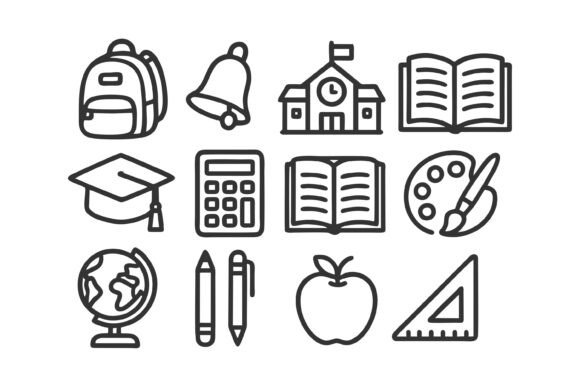
Minimalist Line Art Collection of School
When a set of digital graphics lands on my desk intended for embroidery use, I don’t look at it as a flat image. I immediately start picturing thread on fabric, how a running stitch will trace a delicate curve, and whether a design will hold up after a dozen wash cycles. The Minimalist Line Art Collection of School stopped me mid-scroll—not because it shouts, but because it whispers with confidence. The collection is a bundle of clean, uncluttered school-themed icons and illustrations, delivered as vector files. I knew right away these could become the backbone of a quiet, modern embroidery project that feels handmade and intentional.
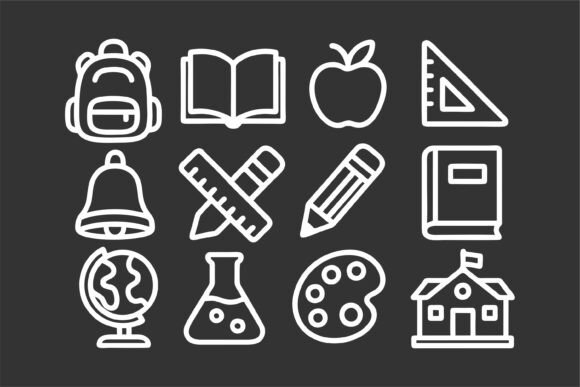
Last week I was preparing a custom embroidered tote bag for a teacher appreciation gift. The recipient loves simple, Scandinavian-inspired design, and I needed something that would feel personal without being cutesy. These line art graphics—pencils, books, a globe, a tiny schoolhouse—fit that brief perfectly. I used one of the stacked book motifs, scaled to about three inches wide, and digitized it as a single-color running stitch on natural canvas. The result was crisp, elegant, and undeniably professional. That’s the strength of the Minimalist Line Art Collection of School: it translates easily into machine embroidery without demanding a dozen thread changes or complex fill stitching.
First look: understated, airy, and wonderfully adaptable
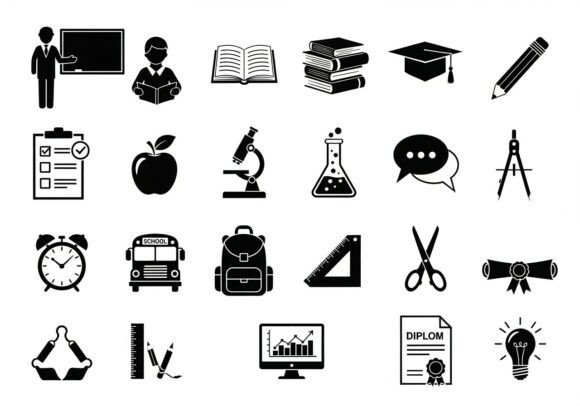
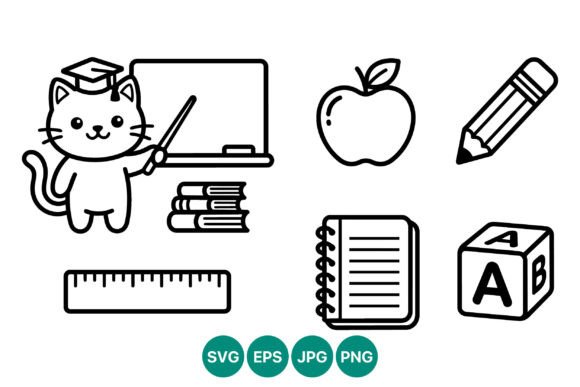
Opening the download, I found a set of simple outline drawings that feel like a modern take on classroom nostalgia. The shapes are open, with just enough detail to be recognizable and no shading or heavy fills. This is a collection of line art in the truest sense, which means it’s begging to be stitched as a fine running stitch, a delicate satin outline, or even a subtle tone-on-tone appliqué guide. The mood is calm, academic, and a little whimsical. There’s nothing loud or trendy here—just timeless minimalist icons that work across a wide range of handmade products.
Because the files are provided as vectors (EPS, AI, SVG, PDF), you have full control over size and line weight before you ever start digitizing. I appreciate that I can open the artwork in my embroidery software, trace the outlines, and assign stitch types without fighting jagged pixel edges. The inclusion of Adobe Illustrator format is a bonus for those who want to tweak shapes before converting to embroidery files. The PDF is also handy for quick mockups. I printed a few pages to test how the designs would look on paper before pulling thread, and the motifs stayed true at every scale.
Where this design truly shines in embroidery
After testing several motifs on a mid-weight cotton tote and a soft sweatshirt, I can say the Minimalist Line Art Collection of School is at its best on projects that call for a light, airy stitch. Running stitch with a 40-weight thread in a single color gives a hand-drawn look that feels bespoke. A slightly thicker satin stitch outline can add presence without bulk. Here are some real-world uses where I’d confidently place these designs:
- Custom tote bags and canvas pouches – the open lines let the fabric texture show through, which makes the product feel organic.
- Linen tea towels and kitchen textiles – a globe or pencil icon in one corner is enough to make a holiday gift feel curated.
- Children’s and baby items – on a soft knit baby blanket or a onesie, a tiny schoolhouse or book stack adds a sweet, not childish, accent.
- Apparel accents – a small emblem on a sweatshirt cuff, a cap side panel, or a chest pocket gives a subtle branding feel.
- Patches and badges – stitch a design on felt, cut around it, and you have a sew-on patch that looks like a boutique purchase.
- Pillow covers and nursery decor – line art on a linen pillow cover reads as modern and calming, perfect for a classroom reading nook theme.
- Etsy shop listings and craft fair merchandise – these designs appeal to customers who want understated, giftable items.
In all these cases, the beauty of the design lies in its restraint. It doesn’t overwhelm the fabric, and it leaves room for personalization—adding a monogram or a short name beside the image feels natural rather than crowded.
When to think twice before pressing start
Every embroidery design has its limits, and with minimalist line art, the watchword is scale. I’d be cautious using these on very small hoop sizes, especially if the original artwork contains fine details like a tiny apple on a desk or the pages of a book. When the motif is reduced below about two inches, thin lines can become fragile or disappear into the fabric weave. I tested a 1.5-inch version of the schoolhouse on a textured linen, and the door and window details nearly vanished. A smooth, tightly woven base like quilting cotton or poplin will always give you better definition.
Dark fabrics are another consideration. A single-color line art design in light thread on a deep navy sweatshirt looks stunning, but the stitch density must be just right. Too few threads and the outline looks starved; too many and the thin lines lose their delicate character. I always recommend testing on the exact garment before committing to a full run. Stretchy fabrics, like those used in baby bodysuits or performance tees, require a good cutaway stabilizer to keep those fine lines from distorting. Without it, even a simple oval-shaped globe can wobble into something unrecognizable.
Curved surfaces, such as baseball caps, pose a challenge for any design with straight, crisp edges. The schoolhouse silhouette, with its pitched roof and sharp corners, can look warped if not hooped perfectly. I would stick to the rounder motifs—like the book stack or globe—on caps, or save the more angular designs for flat items like tote bags and pillow fronts.
Customer perception and the power of subtlety
In my experience selling handmade goods, buyers often gravitate toward what feels curated and intentional. The Minimalist Line Art Collection of School gives a finished product that quiet, boutique quality. When a customer sees a simple embroidered book on a linen wine bag, they don’t just see a picture; they read a story about learning, nostalgia, and craftsmanship. That emotional connection is what turns a $12 item into a $28 gift.
Brand consistency also benefits from using a cohesive set of icons. If you run a small shop specializing in teacher gifts, you can use these designs across multiple products—bookmarks, aprons, zipper pouches, and more—while maintaining a unified visual language. Because the line art style is so recognizable, repeat customers will start to associate it with your brand. That’s invaluable for building trust and encouraging return purchases.
Practical design notes from the embroidery chair
Before you stitch the Minimalist Line Art Collection of School onto a product you intend to sell, here are the steps I follow to avoid surprises:
- Test on scrap fabric. Always. I run a sample on the same fabric and stabilizer combo I plan to use. This reveals any tension issues or scaling problems before I ruin a nice blank.
- Check thread color against the fabric. What looks great on screen may disappear on a natural linen. I compare a few thread swatches under daylight and even take a photo in black and white to see if the contrast holds up.
- Review stitch density. If the original vector lines are very thin, I may need to adjust the running stitch length or switch to a tiny satin stitch to give the line more weight. I try both and compare.
- Confirm hoop size. Even though the digital files are scalable, your embroidery machine has limits. I map out the design in my software to ensure it fits comfortably within my hoop, leaving room for the needle to move.
- Inspect small details after digitizing. Some motifs, like the globe’s latitude lines or the pages of a book, may need simplification. I use my embroidery software to remove tiny, unstitchable details that would only cause thread breaks.
- Test on light and dark backgrounds. A white outline on black canvas can look completely different from a black outline on cream. I keep a swatch book of these combinations.
- Use proper stabilizer. For fine line art, a tear-away stabilizer on woven fabric usually works, but I keep cutaway handy for knits. The last thing I want is a design that puckers or shifts after washing.
Digital files and real-world embroidery
A quick note on the technical side: this is a digital product, not a set of ready-to-stitch embroidery files. You receive the artwork in EPS, PDF, SVG, and AI formats, as well as the option for unlimited prints. That means you’ll need to digitize the designs yourself or use software that can convert vectors to stitch files. I use Adobe Illustrator to fine-tune the line weights, then import the SVG into my embroidery digitizing program. The process is straightforward if you’re familiar with the workflow. If you’re new to digitizing, plan for a little practice time. The good news is that the clean, simple lines make these a forgiving set to learn on.
Since no physical items are shipped, you can download the files instantly and start experimenting. The “unlimited prints” mention suggests you can use the vectors for multiple projects, but always double-check the licensing terms. Most designers allow personal and small commercial use, but if you’re planning to sell finished products on Etsy or at a craft fair, confirm that the license covers commercial embroidery. I keep a printed copy of the license in my project binder for reference.
Final stitch-out thoughts
The Minimalist Line Art Collection of School isn’t the kind of design that screams for attention. It’s the kind that makes a customer pick up a product, run their fingers over the stitching, and smile. It performs beautifully when you treat it with the same restraint it was designed with—single thread, open space, and thoughtful placement. For embroidery designers, small business owners, and crafters who want to create handmade items that feel modern and heartfelt, this collection is a quiet workhorse. It adapts to tote bags, baby blankets, kitchen towels, and boutique apparel without ever feeling out of place. I’ve already earmarked the globe icon for a set of linen napkins destined for a teacher’s holiday gift, and I suspect I’ll be reaching for these files again when graduation season rolls around.